Eagle Mountain, Utah
Your dream yard. Done right. Done on time.
Tell us about your project. Jackson gets back to you fast.
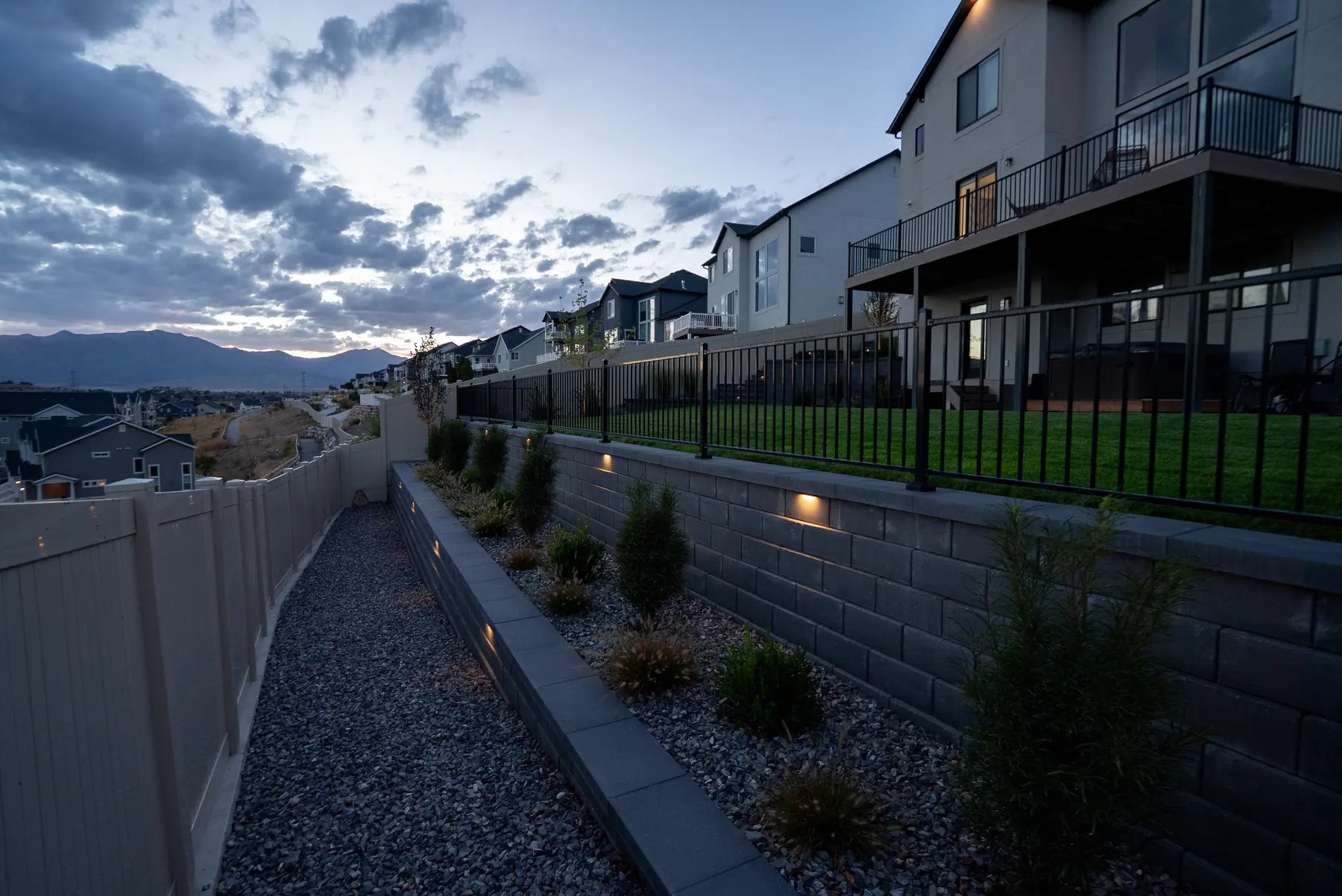
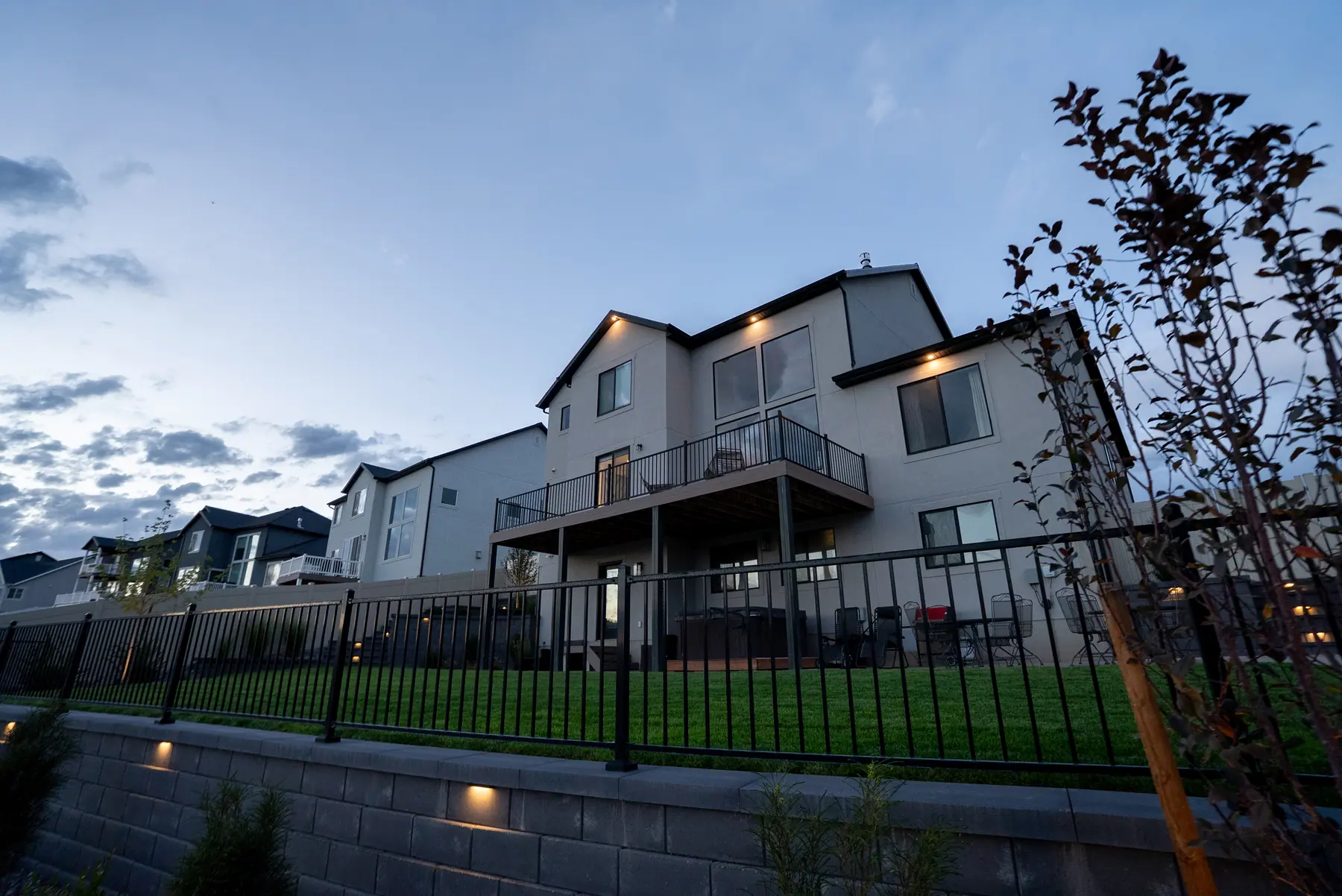
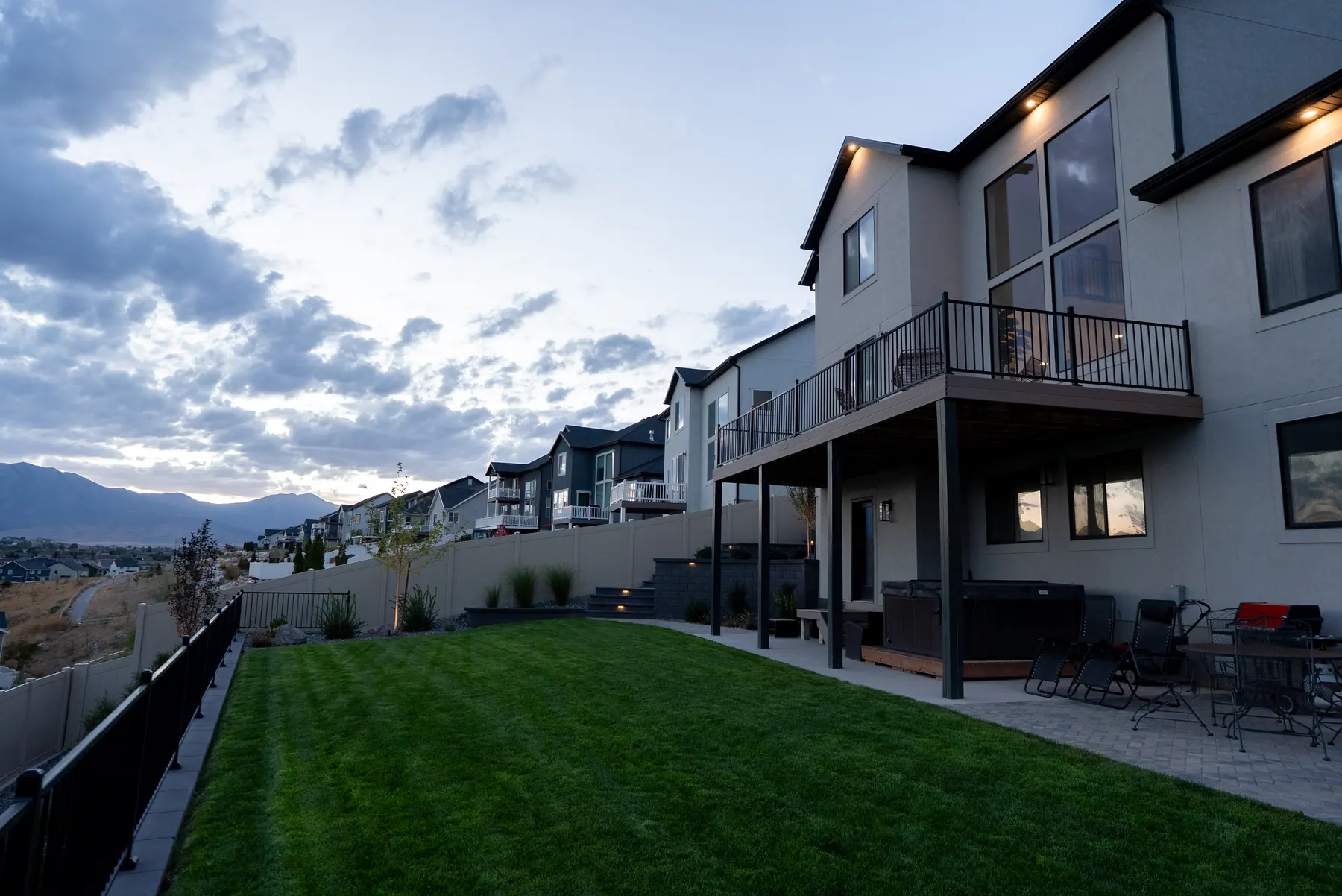
Grading, drainage and retaining walls for Eagle Mountain lots, built to the city's 4 foot permit line and 6 foot height cap, on ground the builder left packed and uneven.
“The team painstakingly put in a retaining wall that will stand for a hundred years.”
“I will be using them for all of my landscape needs, a pleasure to work with!”
Grading and Retaining Walls in Eagle Mountain
Eagle Mountain's Building Department spells out its retaining wall rule in a handout, and the details matter. A wall under 4 feet tall, counting the 30-inch footing depth, does not need a building permit. It still has to meet the zoning rules in city code 17.60. Go taller than 4 feet and you need a permit plus engineered drawings. No wall in the city can rise more than 6 feet from finished grade to the top.
That footing detail catches people. Because the buried part counts, a wall that shows only about a foot and a half above the dirt can already be near the line. We measure the whole wall, not just the face you see. When a design needs a permit, the application goes in through the city's online portal with a site plan showing distances to your property lines, construction plans and the engineer's drawings.
The ground itself is kinder than in a lot of Utah County. USU describes the native soil here as well-drained and not prone to ponding. The trouble is what happens during the build. Crews strip the topsoil, pack the lot with equipment and leave grades that tip back toward the house. Lots near the base of the Lake Mountains add real slope on top of that. We shoot the grades, fix the fall away from the foundation and build walls with drain rock behind them.
Eagle Mountain is two climates in one city, the milder Ranches by the Lake Mountains and the colder City Center out toward Fairfield, with open Cedar Valley wind, metered city water and a one-year clock on new front yards.
Know your Eagle Mountain ground
The Eagle Mountain challenges
Native ground here drains well, but a lot that loaders drove over for months does not. Water from snowmelt and sprinklers sheets off the hard surface and heads for the lowest spot, which is often a window well or the side yard. Loosening the ground and regrading fixes most of it.
Eagle Mountain counts the 30-inch footing depth toward the 4 foot limit. A crew that measures only the visible face can build a wall that needed a permit and engineering and got neither. That tends to surface at resale or when the city notices. We measure from the bottom of the footing every time.
Lots along the base of the Lake Mountains can climb fast. Cutting a flat yard into that kind of slope means walls, and the 6 foot cap above finished grade limits how tall any one wall can go. Terraces with planted steps usually work better than one big wall anyway.
A freshly graded slope with nothing on it is an easy target. Dry spring wind strips fine soil right off it, and this valley has blown enough dust to close the main road through town. We cover finished slopes with rock or planting as soon as the grading is done.
The J&H approach
We shoot elevations at the house, the lot lines and the street, and set a fall away from the foundation all the way around. Then we decide where water leaves the lot, so it is not dumped on the neighbor below you.
We plan wall heights around the 4 foot permit line and the 6 foot cap from the first sketch. If the yard needs more height than that, we split it into terraces or work with a licensed engineer and file the permit.
Every wall we build gets a compacted base, clean drain rock behind it and a perforated pipe that lets water out. Water trapped behind a wall freezes and pushes, and nights near City Center get very cold. Drainage is what keeps a wall standing.
From our job sites
Short videos from real J&H job sites. Tap one to play it with sound.
What homeowners say
"We had a really big project (full lot project) and a crazy timeline, and Jackson and his team were awesome. They are very efficient, work hard to get things done quick, and the quality of their work is top-notch. Great company. Great guys. I would highly recommend them for any landscaping needs."
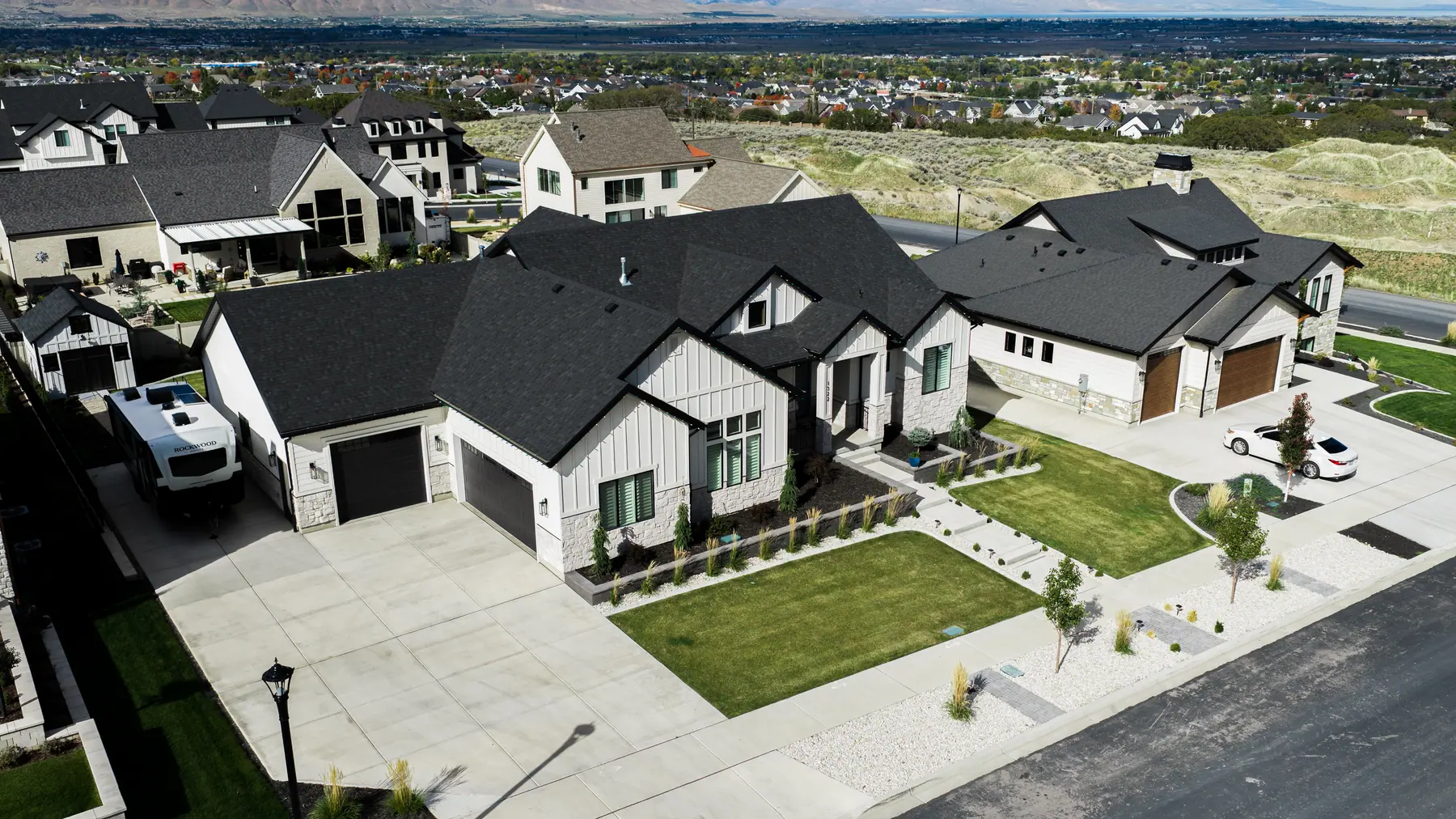
"Jackson and his crew did a phenomenal job on our back yard. I had a vision and they brought it to life. We had them do a retaining wall, grading, underground trampoline, sprinkler system, and sod. They met deadlines, communication was on point, and the whole crew was friendly.…"
"…The job was completed quickly without sacrificing quality, and the results exceeded our expectations. We would absolutely hire this team again and recommend them to anyone looking for landscaping help."
Everything we do in Eagle Mountain
Hiring in Eagle Mountain?
Grading and Retaining Walls near Eagle Mountain
Eagle Mountain questions
Your dream yard. Done right. Done on time.
Tell us about your project. Jackson takes a look and gets you an honest quote, no pressure.