Saratoga Springs, Utah
Your dream yard. Done right. Done on time.
Tell us about your project. Jackson gets back to you fast.
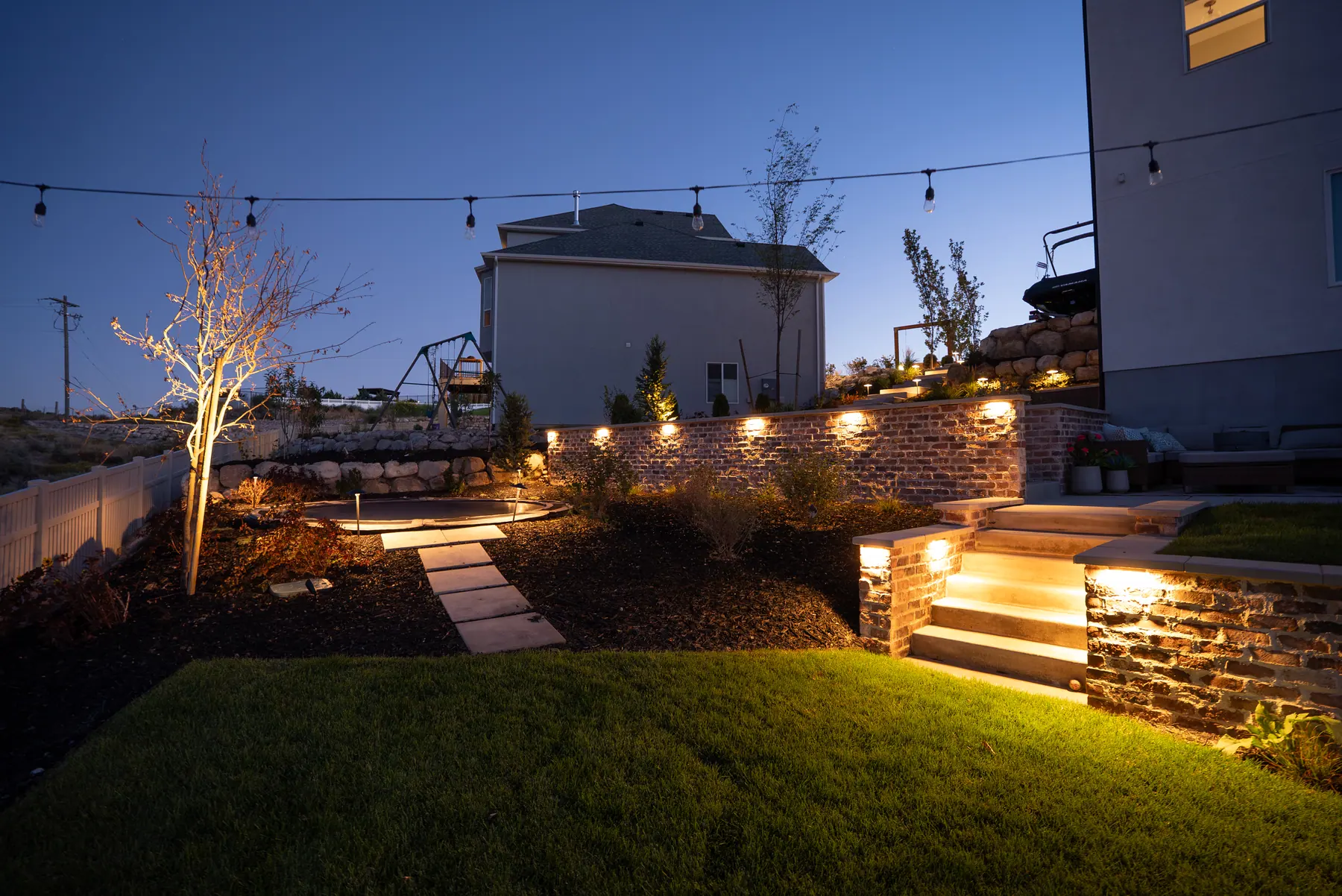
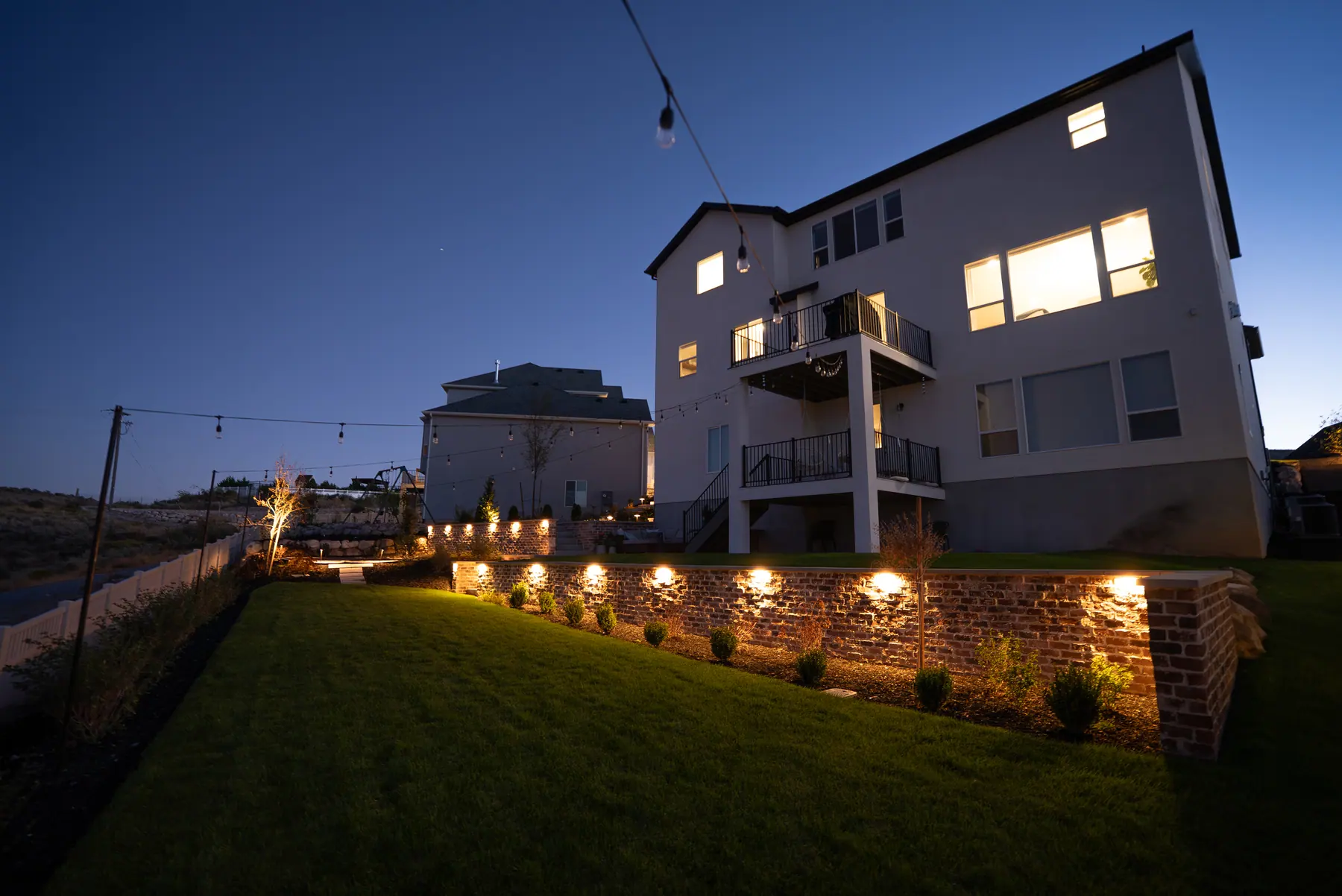
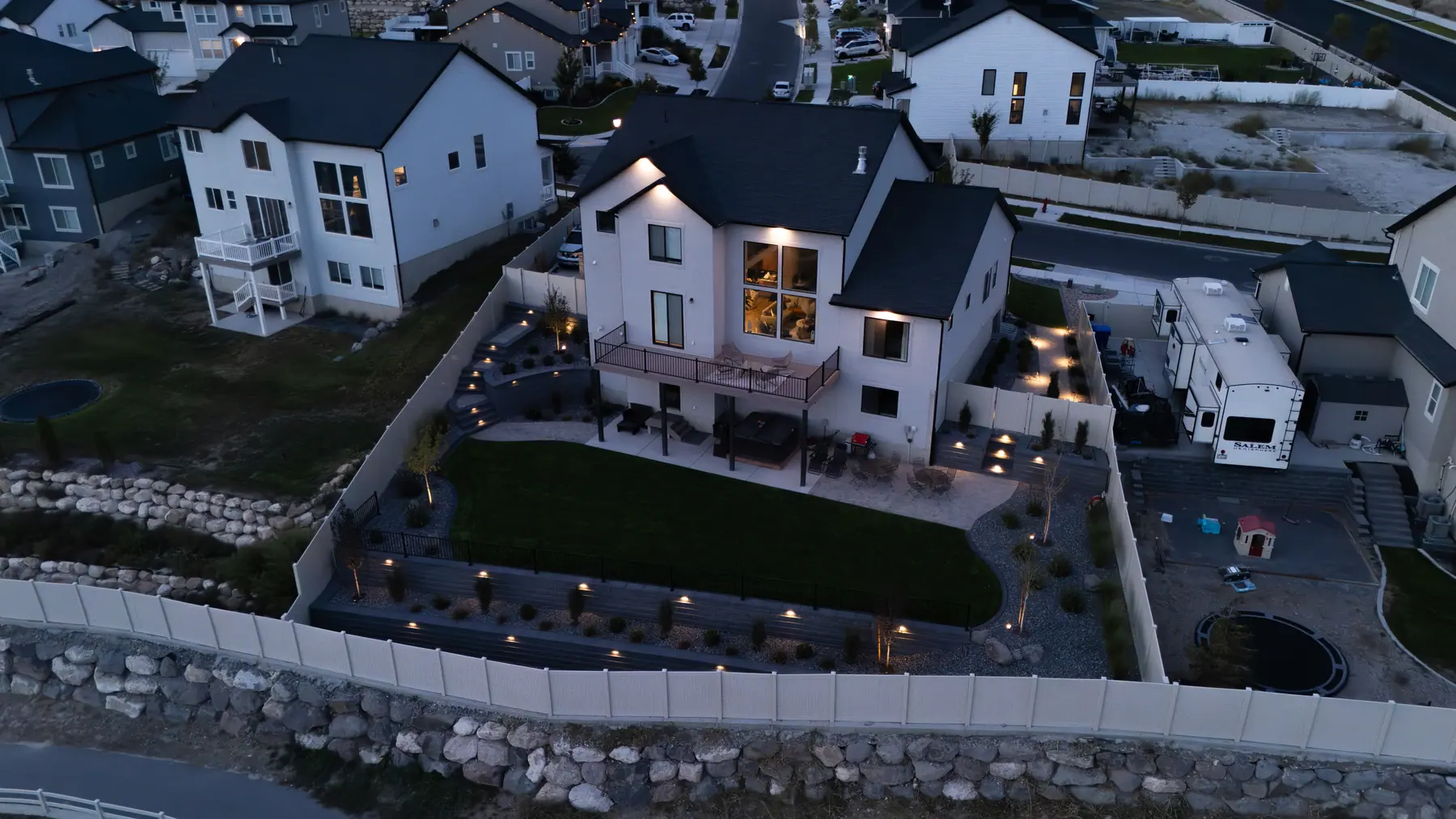
Grading, drainage and retaining walls for Saratoga Springs lots, from flat yards near Utah Lake to foothill slopes that fall under the city's hillside rules.
“Sidewalks, retaining wall, and raised garden are all beautifully done.”
“We would absolutely hire this team again and recommend them to anyone looking for landscaping help.”
Grading and Retaining Walls in Saratoga Springs
Saratoga Springs draws clear lines for walls, and they are worth knowing before anyone stacks a block. A retaining wall 4 feet or taller of unbalanced fill needs a building permit. So does any wall holding up a surcharge, like a driveway, a shed or a sloped yard sitting above it. The code also says to check Chapter 18 for a grading permit. If a fence goes on top of the wall, its height is measured from the high side.
Up toward the foothills on the west side of town, slopes of 15 percent or more fall under the Hillside Development chapter, 19.10. That brings in licensed professionals, a slope map, a geology report from a licensed geotech and a fire protection report under the Utah Wildland-Urban Interface Code. A single wall there tops out at 10 feet. A bigger grade change has to step down in up to three walls, none over 6 feet, with planted terraces between.
Most grading jobs in town are smaller than that, and they still matter. The city says yard flooding usually traces back to unfinished yards, poor grading near homes and runoff off the hillsides. We set the ground to fall at least 5 percent away from the house, shape swales that carry storm water to a planned outlet, and build walls that hold their ground for good instead of leaning a little more every spring.
Saratoga Springs went from about 1,000 people in 2000 to an estimated 61,000 in 2025, so most yards here started as bare dirt on a city deadline, watered by a metered pressurized line that charges more once you pass your lot's allotment.
Know your Saratoga Springs ground
The Saratoga Springs challenges
A wall 4 feet or taller of unbalanced fill needs a building permit here. Some get stacked a course or two past that line with no paperwork, no drain rock and no engineer. It may stand for years. Then a wet spring pushes it out, and an unpermitted wall can come up again when you go to sell.
The city lists runoff off the hills as a main source of yard flooding, and summer cloudbursts are the storm it warns about most. The natural channels east of Lake Mountain sit dry until one hits. On a foothill lot, a sheet of water can come down the slope in minutes and cut right through your beds.
On hillside lots, walls over 4 feet must sit at least 3 feet apart, or half the height of the taller wall, whichever is more. The terrace between has to stay landscaped. Walls jammed close together break the rule and leave no room for roots, drainage or a person with a shovel.
Lower lots toward the lake can be very flat, and groundwater may sit closer to the surface there. A yard graded dead flat holds every puddle after a storm. Water that cannot run off soaks in next to the foundation, which is the one place you least want it.
The J&H approach
Before we design a wall, we measure the grade change and look for any load above it. If it hits the 4 foot permit line or sits on a 15 percent slope, we bring in the licensed engineer and geotech the city requires. You know up front if a permit is part of the job.
Every wall gets drain rock behind it and a perforated pipe at the base that daylights somewhere useful. Water pressure is what pushes walls over, so we give that water a way out. On soft or wet ground, filter fabric keeps fine soil from plugging the rock.
We shoot elevations off the foundation, hold the 5 percent fall away from the house and shape swales toward a safe outlet. Fill goes in thin, compacted lifts so it does not settle later. Before we pack up, we run a hose and watch where the water actually goes.
From our job sites
Short videos from real J&H job sites. Tap one to play it with sound.
What homeowners say
"We had a really big project (full lot project) and a crazy timeline, and Jackson and his team were awesome. They are very efficient, work hard to get things done quick, and the quality of their work is top-notch. Great company. Great guys. I would highly recommend them for any landscaping needs."
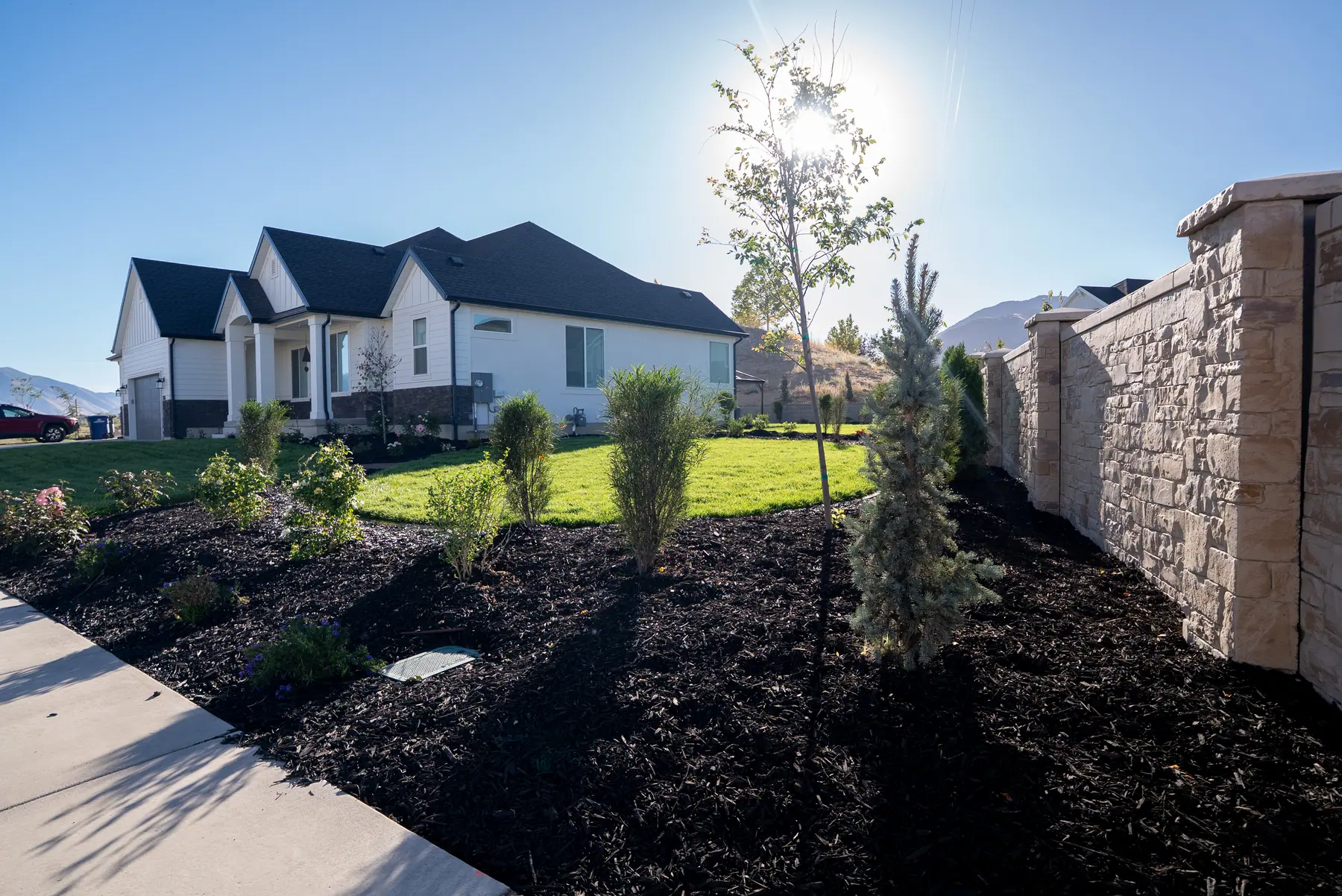
"Jackson and his crew did a phenomenal job on our back yard. I had a vision and they brought it to life. We had them do a retaining wall, grading, underground trampoline, sprinkler system, and sod. They met deadlines, communication was on point, and the whole crew was friendly.…"

"…The job was completed quickly without sacrificing quality, and the results exceeded our expectations. We would absolutely hire this team again and recommend them to anyone looking for landscaping help."
Everything we do in Saratoga Springs
Hiring in Saratoga Springs?
Grading and Retaining Walls near Saratoga Springs
Saratoga Springs questions
Your dream yard. Done right. Done on time.
Tell us about your project. Jackson takes a look and gets you an honest quote, no pressure.